02The film in 115 minutes
Twenty-seven beats, five movements
The intensity line climbs in three waves (the jump, first blood, Trenton) and lands on one line of dialogue.
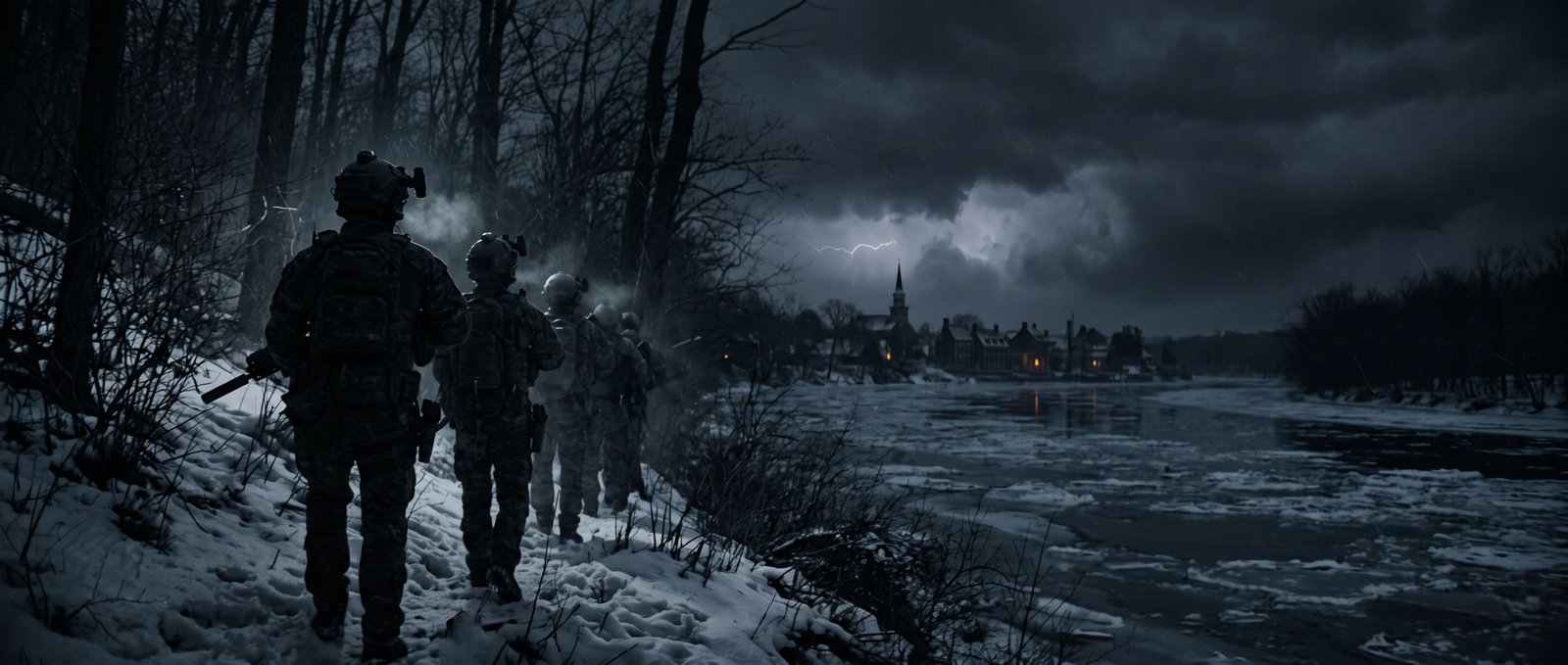

Fourteen modern operators. November 1776. One mission to keep history alive.
Concept work and the screenplay, tracked in one place. Every change on the scene board and checklists below updates these numbers for everyone who opens this page.
The checklist estimates about 123 pages against a 115-minute target. Act Two B runs 4½ pages over its 20-minute budget; Two A and Three each run about 2 over.
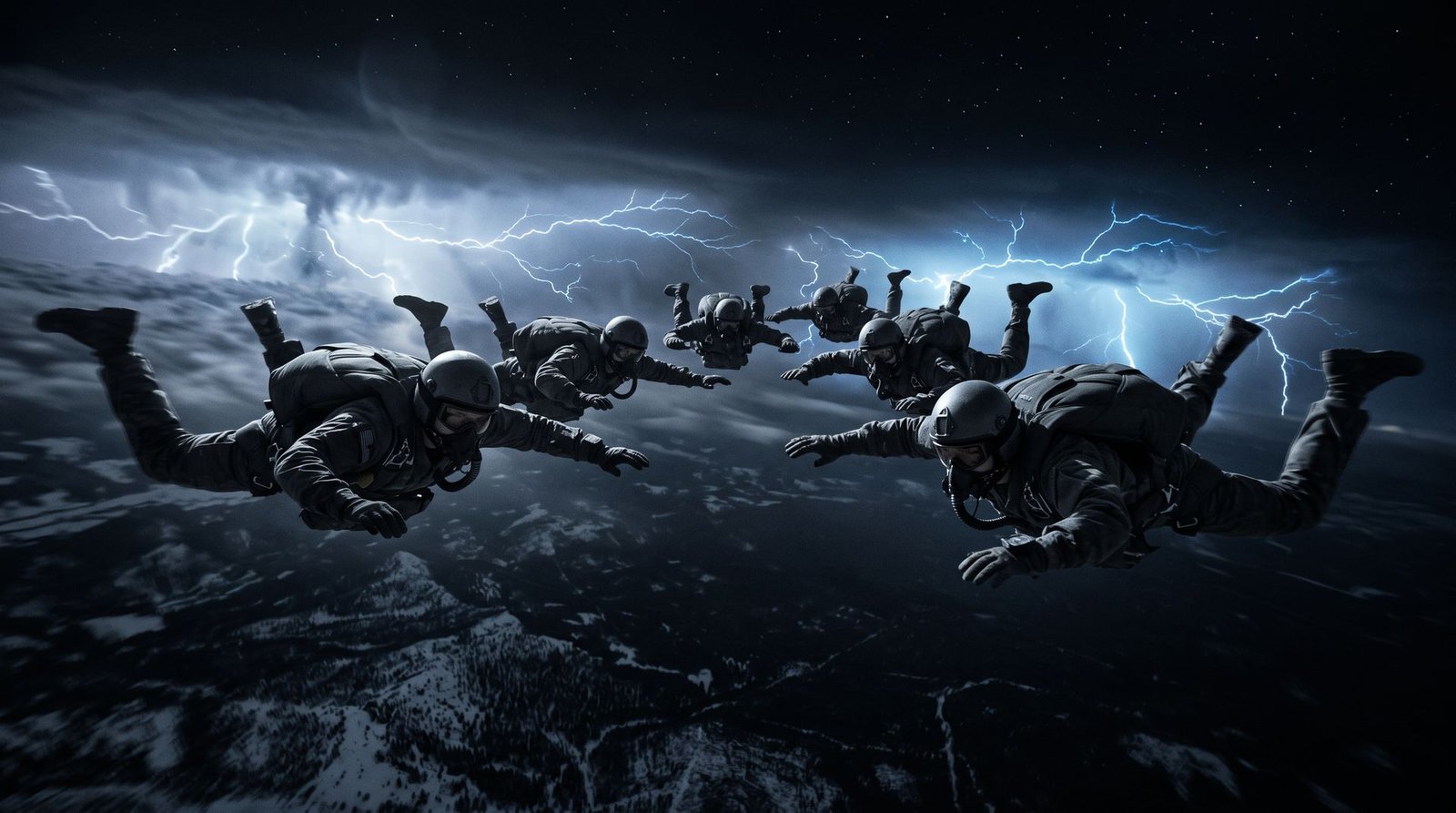
A 14-man JSOC assault element jumps into a routine training exercise and lands in the New Jersey Pine Barrens in November 1776. With the Revolution collapsing and George Washington refusing to gamble, they take the war’s turning point into their own hands on Christmas night.
The special-operations mission of enabling a resistance movement to coerce, disrupt or overthrow an occupying power. In 1776, that resistance movement was the Continental Army.
If you could win the war tonight, would you do it — and who would you become doing it?
The intensity line climbs in three waves (the jump, first blood, Trenton) and lands on one line of dialogue.
History on one side, Hectic on the other. They run in step until December 21, when a beaten Washington refuses to attack and the team decides it has to happen anyway.
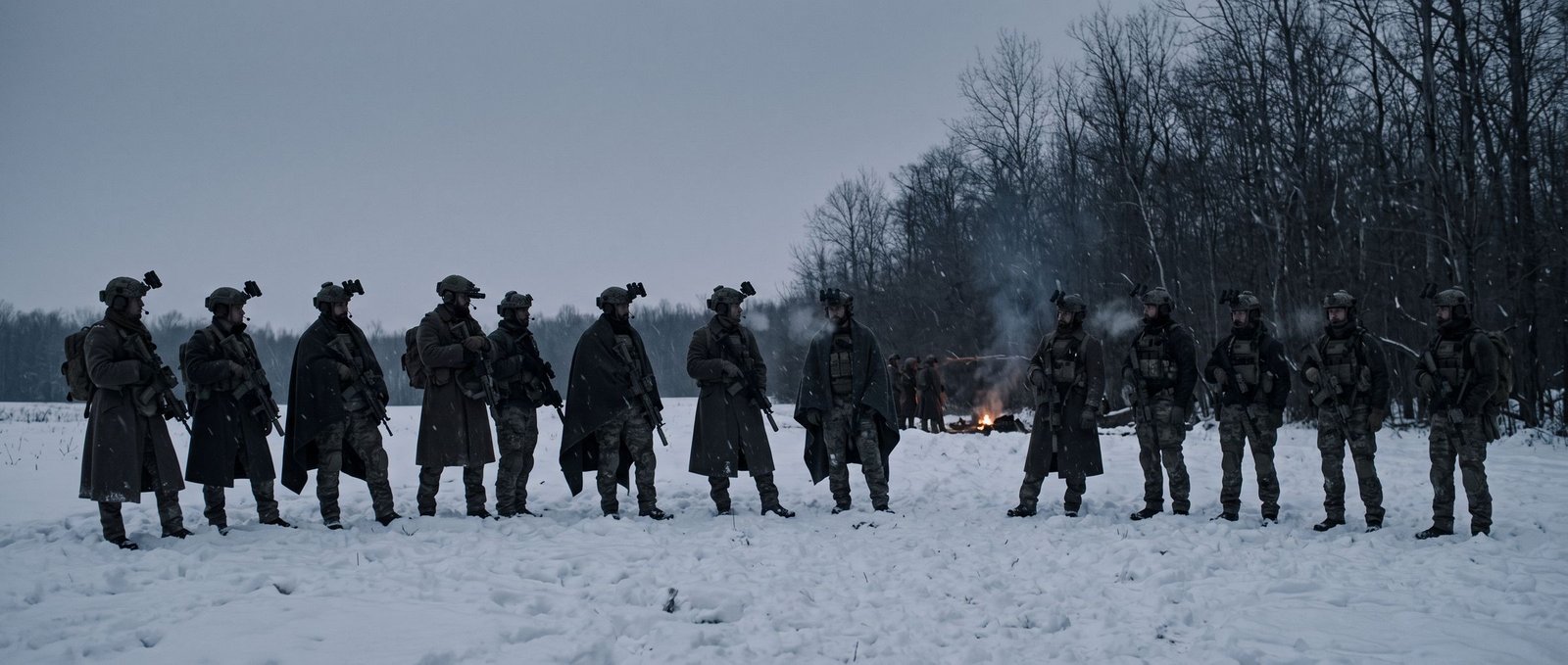
Thirty minutes in five phases. The camera rule: we live inside the team’s night vision; the Hessians live in total darkness.
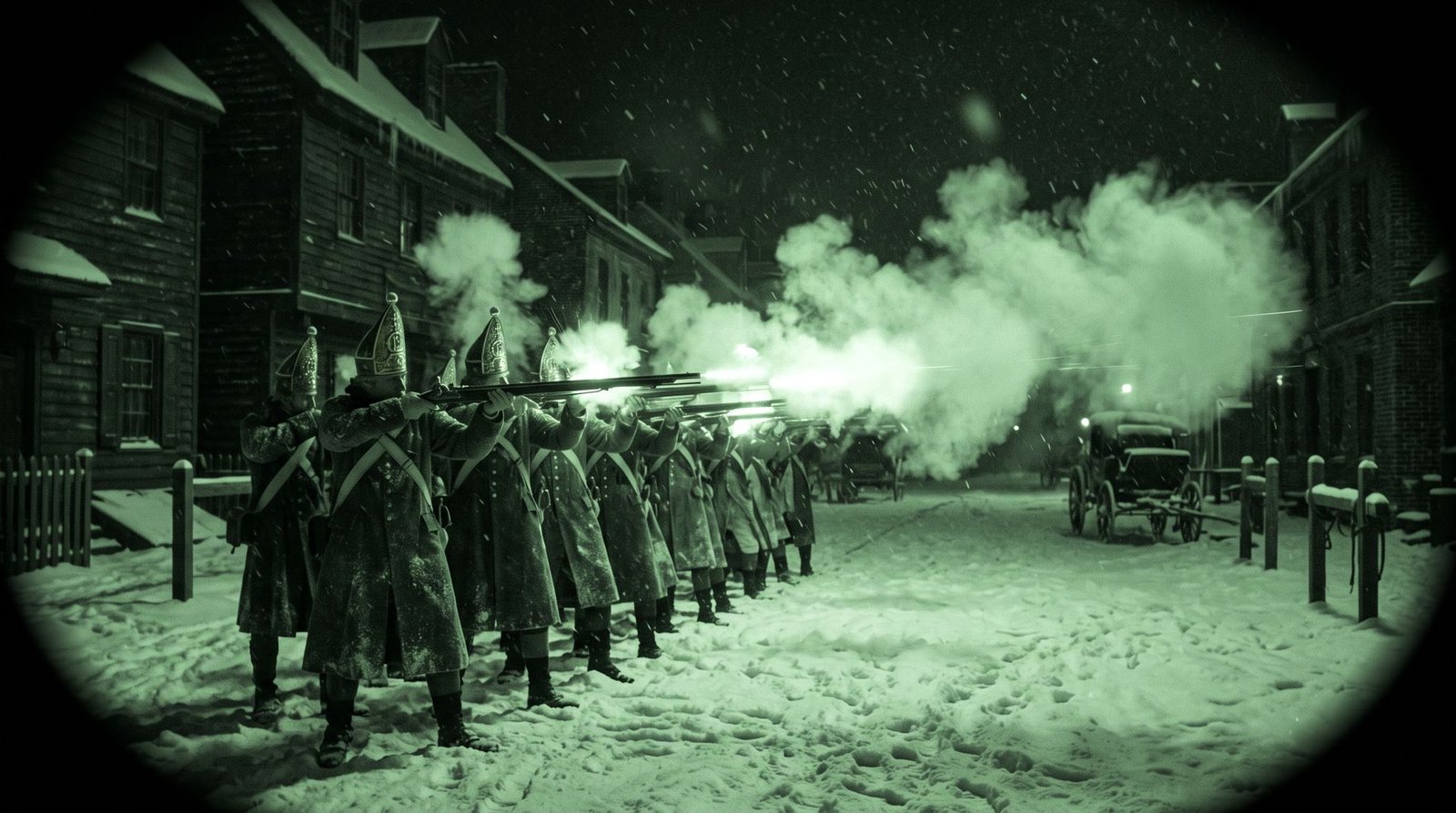 King Street · 0300 · through the tubes
Modern weapons suppressed, tight, almost polite. Muskets enormous, with long smoke. Every musket flash shows the Hessians nothing but snow.
Present day is cool and digital; 1776 is candlelight, woodsmoke and frost. Night-vision green is the only modern color that survives into the past. Gear degrades on screen.
All 54 scenes in script order. Set a status and owner as pages land. Notes stay with the scene.
Tick each end when it is on the page.
Decisions the outline leaves open. Write the call once it is made and it moves to decided.
| Original draft | This outline | Why |
|---|---|---|
| A generic pine forest | The New Jersey Pine Barrens | Real wilderness in Washington’s line of retreat. |
| Washington refuses to attack | Kept: he refuses because he’s shell-shocked and defeated | Grounded in real losses: Long Island, Manhattan, Fort Washington. |
| Christmas Eve attack | Christmas night, Dec 25–26 | The real date and the real nor’easter, which carries the balloons. |
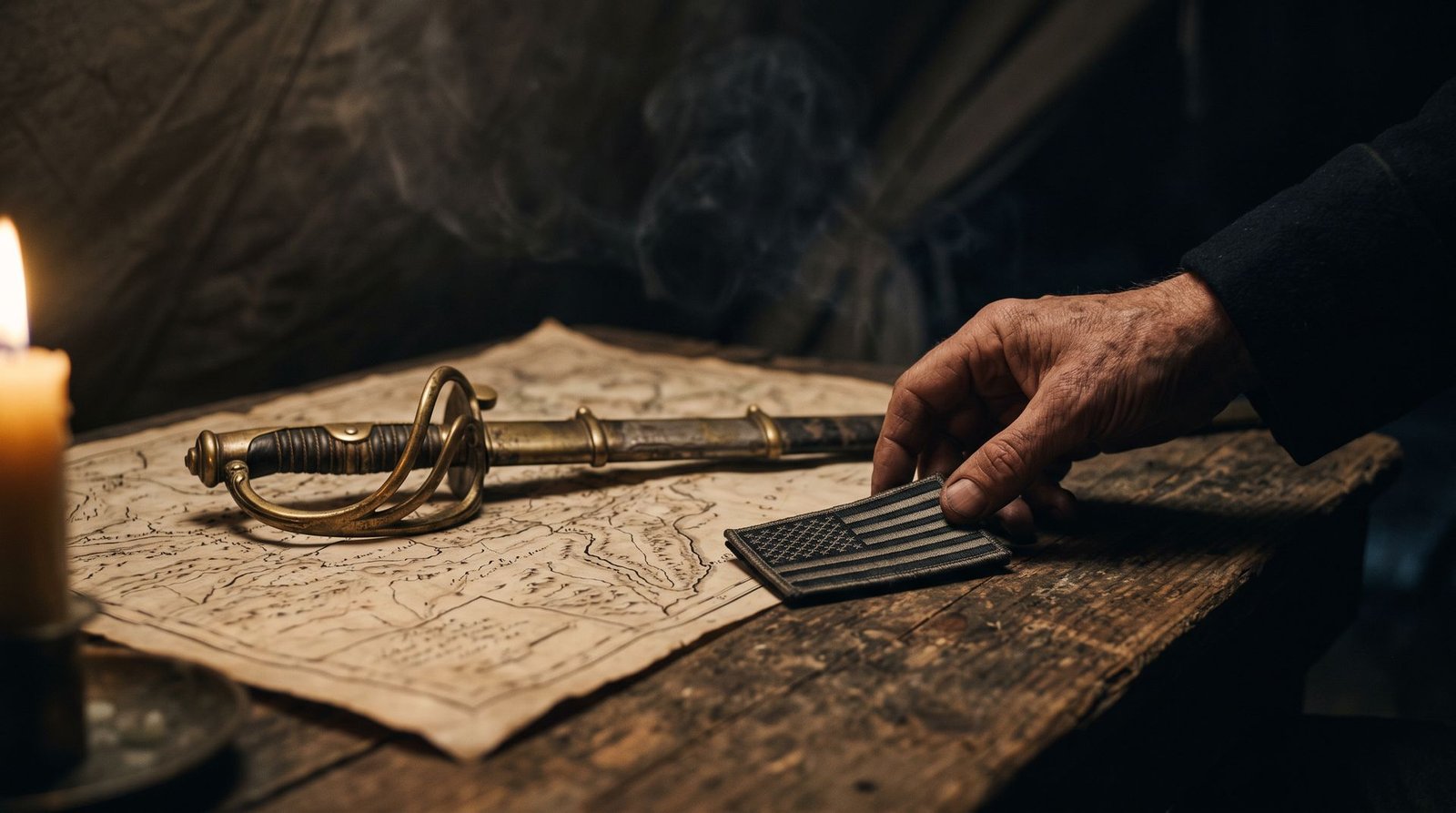
| British general | Hessian Col. Johann Rall; bounty from Howe | Trenton was a Hessian garrison. The sword is Rall’s. |
| Washington’s hat on the desk | Cole steals it on Christmas Eve | Explains the hat, and why the British blame Washington. |
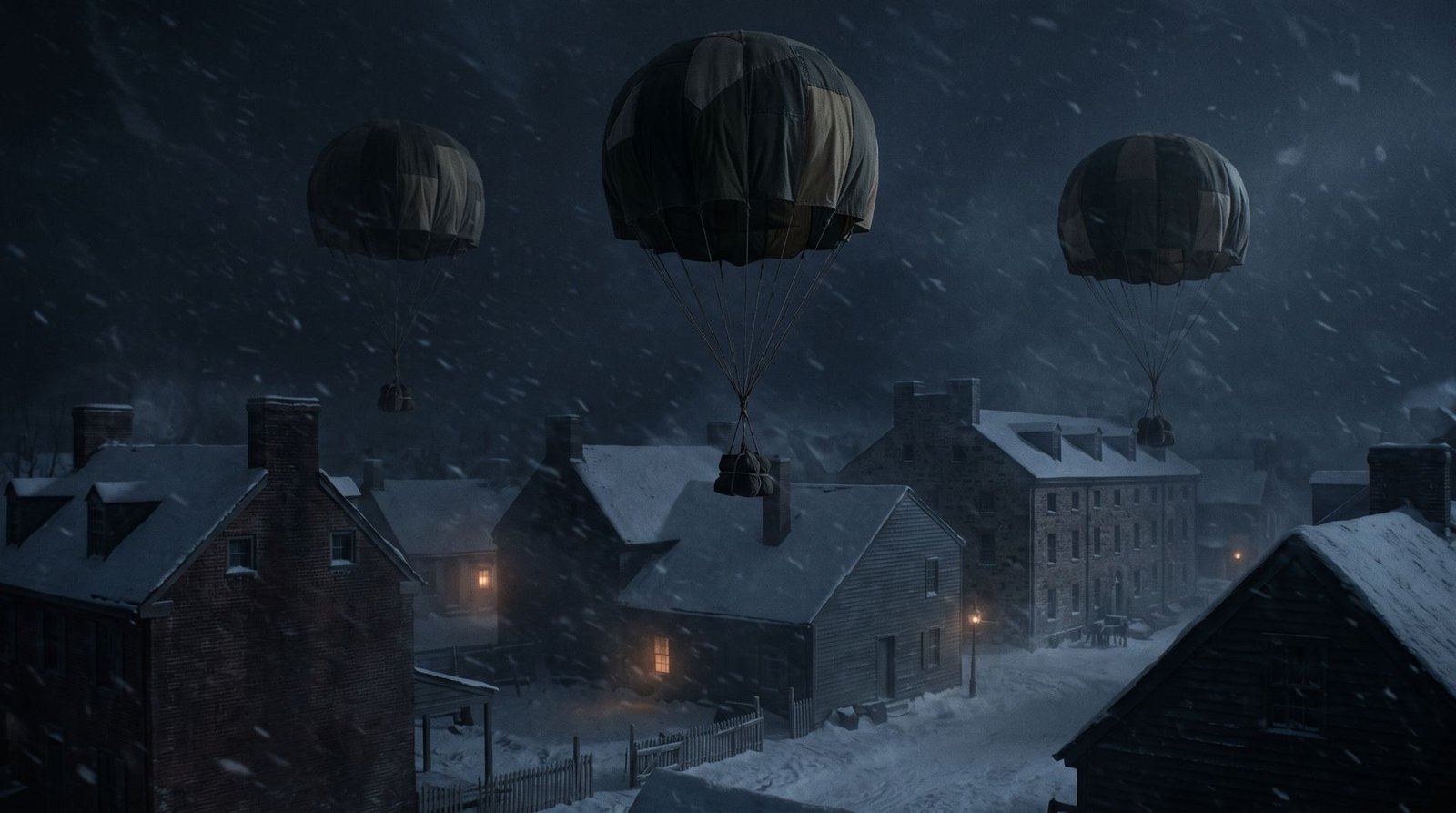
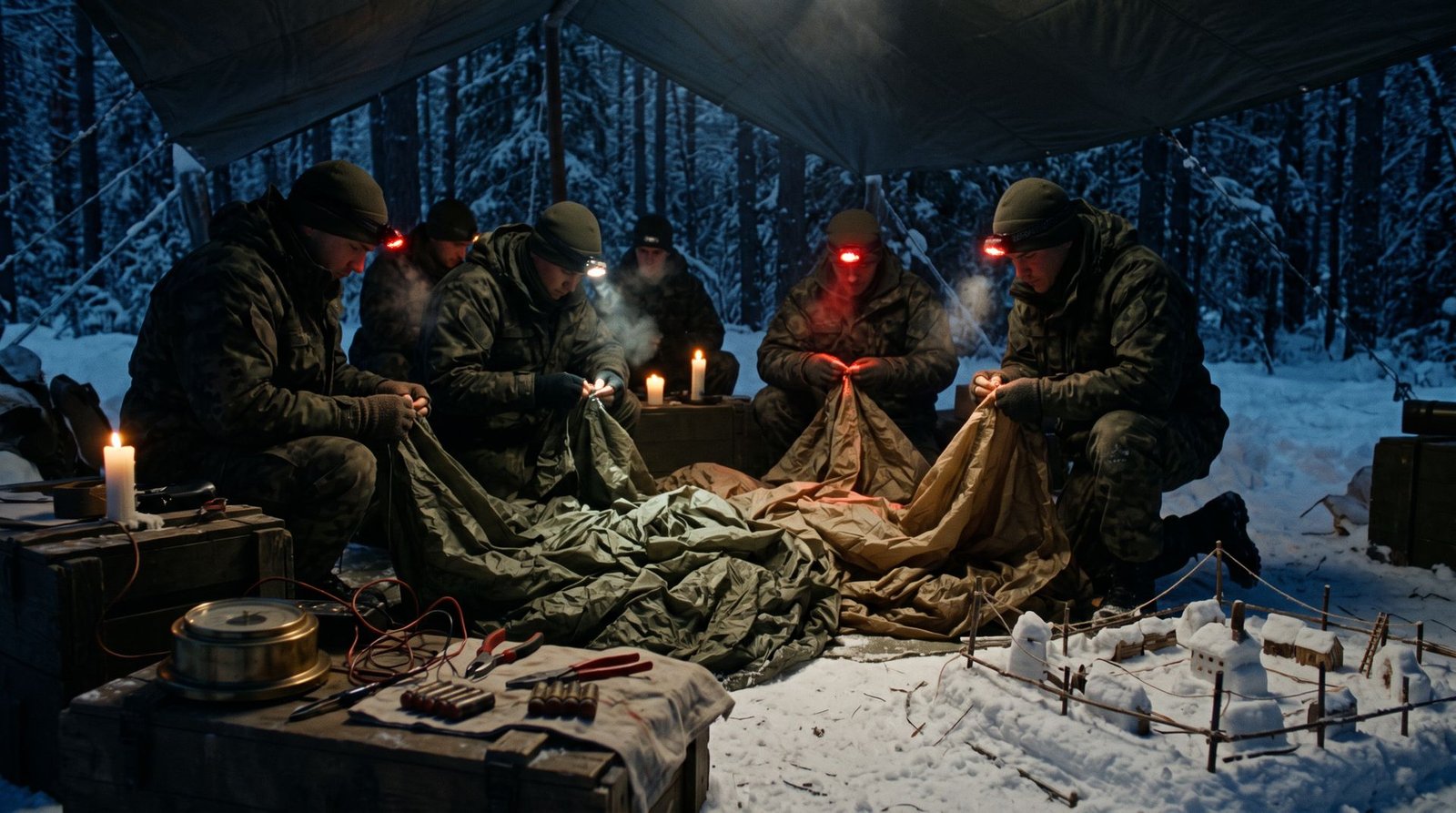
| Hot-air balloons | Built from their own parachute canopies | Balloons don’t fly until 1783; nylon makes it plausible. |
| American flag patch | A 50-star patch; Washington counts the stars | The Stars and Stripes doesn’t exist yet. The patch is the proof. |
Freefall into a silent lightning storm, then canopies under a sky with no lights on Earth.
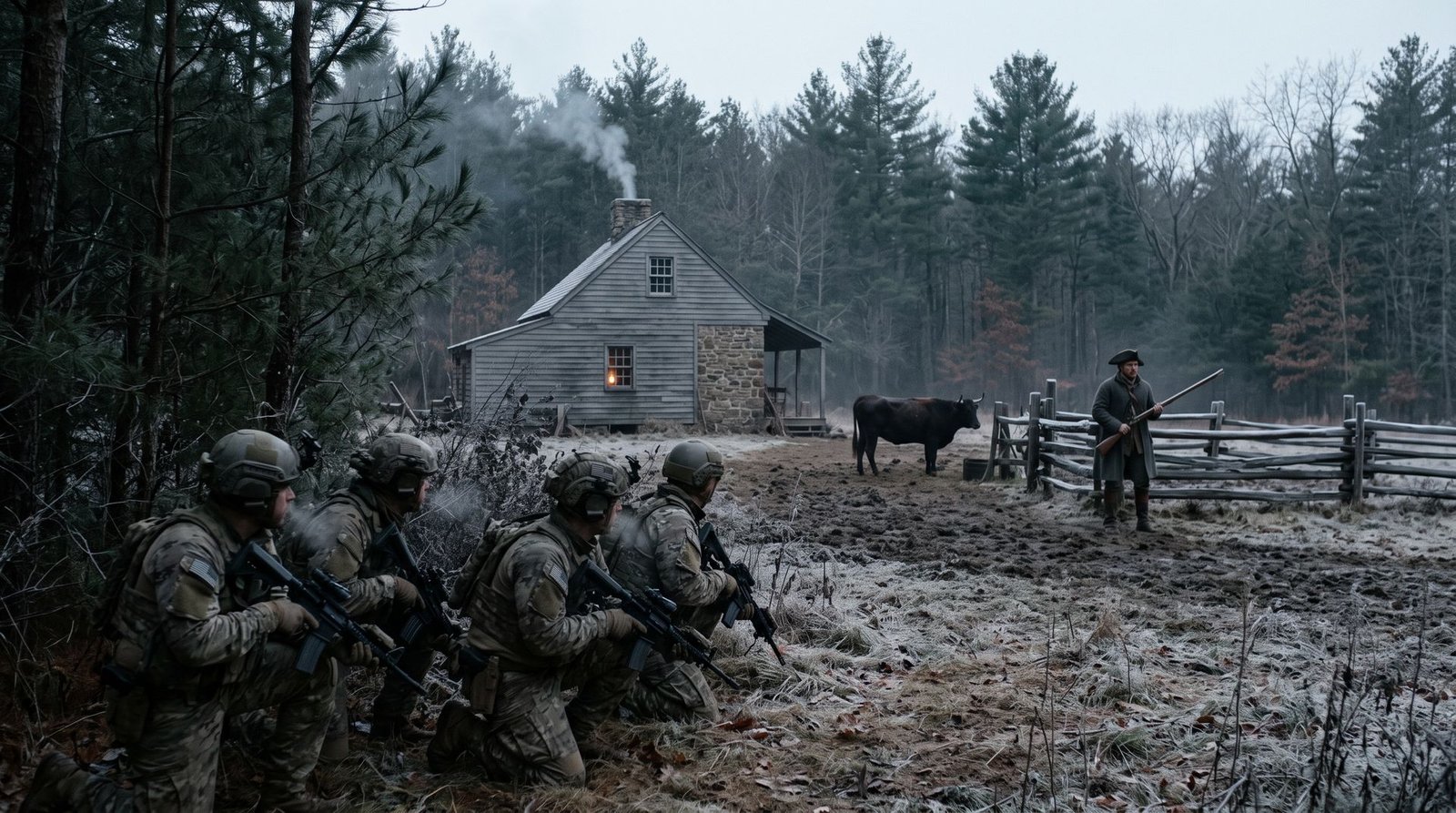
The barnyard: forty seconds of suppressed rifles against Hessian muskets.
Balloons drifting over Trenton in a blizzard, then detonating.
King Street through night vision: a machine gun against a volley line that can’t see.
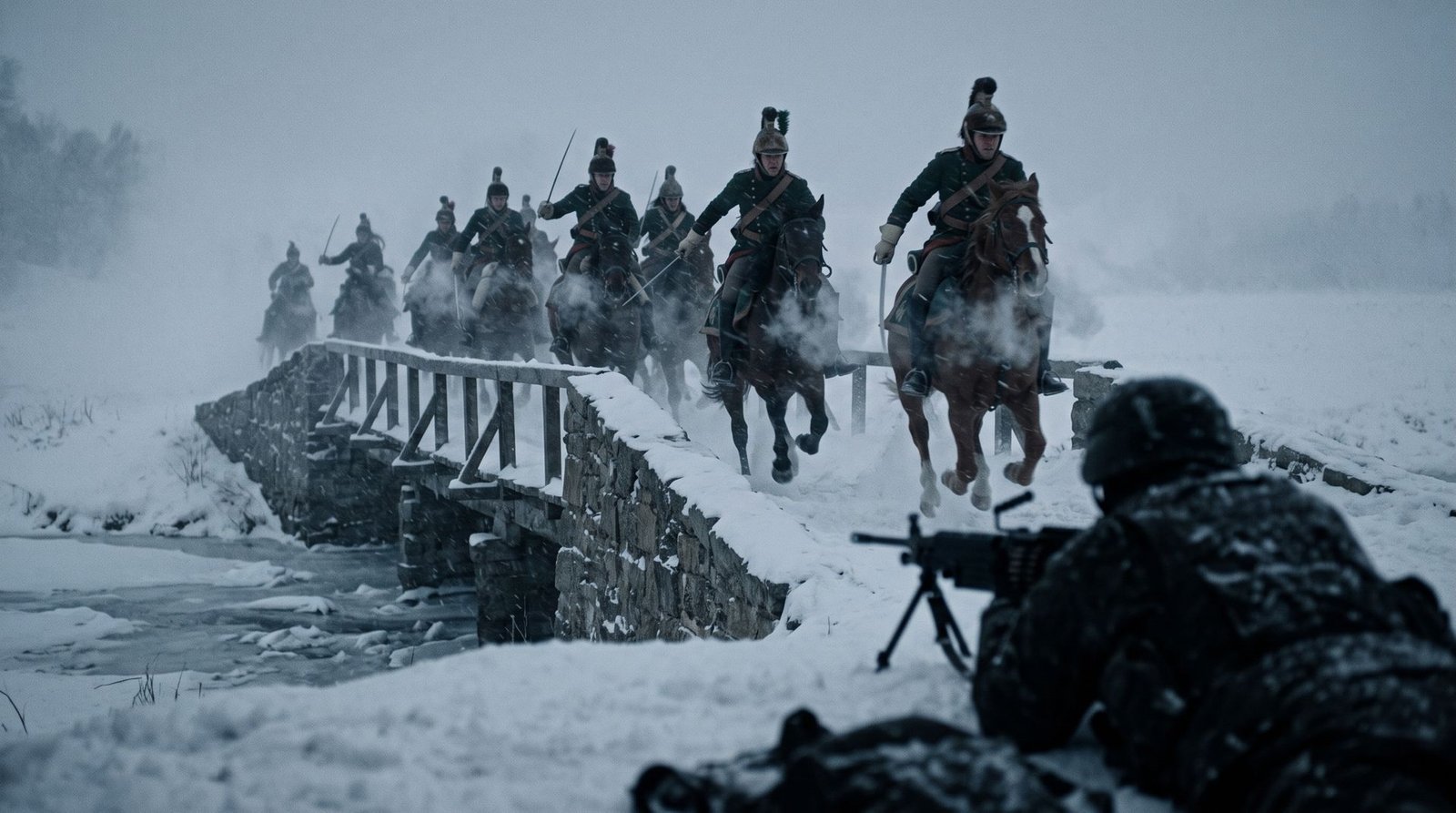
Dragoons charging out of the snow into a machine gun at the Assunpink bridge.
Two palettes. Present day is cool and digital; 1776 is candlelight, woodsmoke and frost.
Finite power: every round and battery is irreplaceable. Men out of time: Billy’s letter, Sparks’ radio. Leadership: a beaten general and the men who carry him. The price of terror: Hale keeps the audience honest.
André, the future British spymaster, now owns 21st-century gear. Tarleton lives with a grudge. Princeton is eight days away. And the storm may come back.